Bioma Probiotics or Happy Mammoth Hormone Harmony? We Tried Both to See What Works
 3
3
 50050
50050
 6 min
6 min
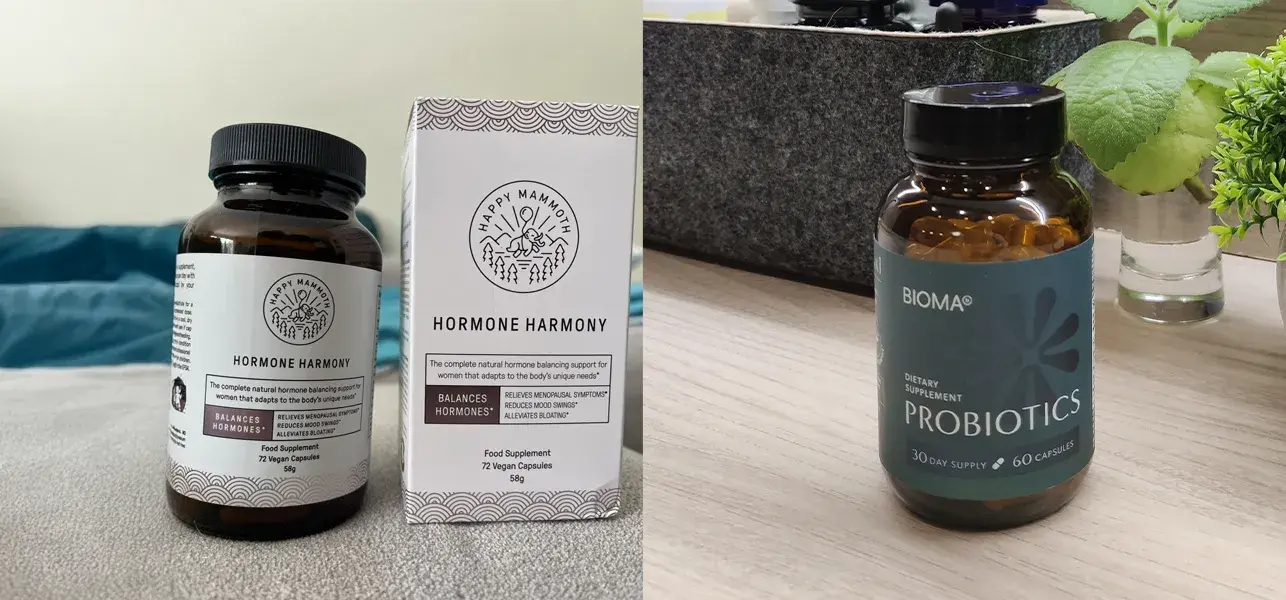
Let’s talk about something no one really warns you about: how hard it gets to lose weight in your 40s and 50s (especially around the belly).¹
One day, your usual routines stop working.
You’re eating well, staying active, maybe even skipping dessert more often than you’d like… and somehow the scale doesn’t move.
We started noticing this more and more in our own suburban-mom lives. Nothing was working anymore, and the frustration was getting R-E-A-L.
So when we kept seeing two supplements, Bioma Probiotics and Happy Mammoth Hormone Harmony, come up in reviews and forums, we figured…
Why not see if either of them actually does anything?
Because 9 in 10 menopausal women gain significant amounts of weight, resulting in almost half of them becoming obese during this life stage.2,3
But these brands claim to help with this stubborn menopausal weight, so we tried them both.
And here’s what happened next.
Same struggle, two different solutions
Bioma and Happy Mammoth both seem to target the same thing – the extra weight that shows up in your 40s and just doesn’t budge.
They also mention things like low energy, bloating, and feeling off in general, which… checks out.⁹
But once we looked into how they actually work, the difference was pretty clear.

But first, what really drives your menopausal weight gain?
At first, it’s easy to blame age or a slowing metabolism.
But what actually drives weight gain during perimenopause and menopause is a hormonal shift – and it’s a big one.³
As estrogen drops, your body starts storing more fat, especially around the belly.
At the same time, cortisol (stress hormone) often spikes and stays high, which leads to storing even more fat, stronger cravings, and worse sleep, making day-to-day life so much more challenging.⁴
This combo creates the “perfect” storm: your body holds on to weight more easily, burns fewer calories, and sends stronger hunger signals, even if your lifestyle hasn’t changed at all.
And that’s what makes menopausal weight gain feel so frustrating. It’s not you. It’s your hormones quite literally working against you.
Let’s break down the ingredients
Once we started comparing the formulas, the differences jumped out fast.
Happy Mammoth uses a mix of herbs and adaptogens – things like maca, ashwagandha, DIM, and chasteberry.⁵ These ingredients are often used in hormone-balancing supplements, especially for easing PMS or menopause symptoms like mood swings, fatigue, and irritability.
Bioma takes a more targeted approach – and it’s backed by research we were honestly surprised to find.
Its formula includes three specific strains of Bifidobacterium (the probiotic most closely linked to female hormone balance), XOS prebiotics, and Tributyrin postbiotics.
These aren’t just for gut health; they work directly on two of the hormones that drive menopausal weight gain: estrogen AND cortisol.
Let’s start with cortisol.
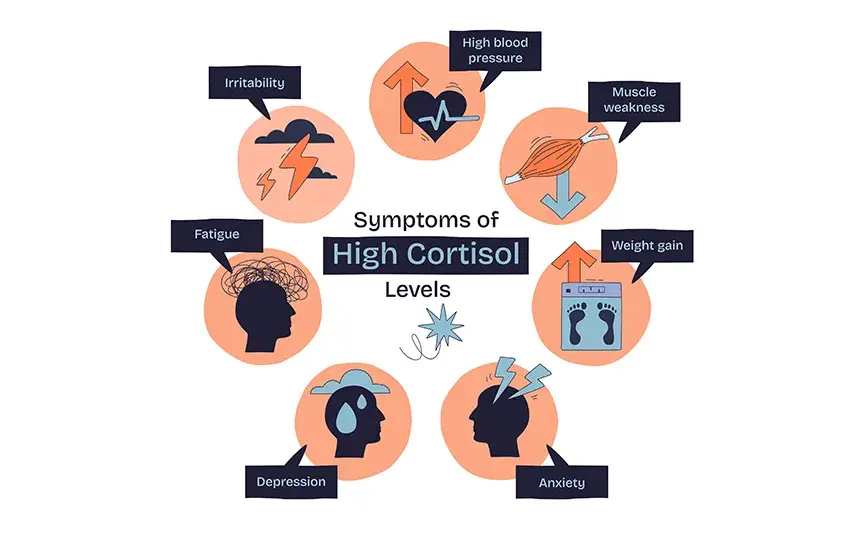
That’s the hormone that spikes when you’re stressed, and it’s been directly linked to belly fat, cravings, poor sleep, and slowed metabolism.
According to studies published in the European Journal of Clinical Research and the Journal of Functional Foods, combining probiotics and prebiotics (like those in Bioma) can lead to a 39% reduction in cortisol levels.⁶ ⁷
That’s not a side benefit, that’s a direct hit on one of the most stubborn causes of midlife weight gain!
As for estrogen, Bioma supports that too. Not by adding hormones, but by restoring the part of the gut microbiome responsible for metabolizing estrogen, known as the estrobolome.
Low levels of Bifidobacteria (which naturally decline with age) have been linked to poor estrogen balance and increased fat retention. By replenishing these strains, Bioma helps your body regulate estrogen more efficiently. Yes, without HRT.⁸
So while Happy Mammoth may help with surface symptoms, Bioma’s ingredient list is aimed directly at the root hormonal causes of menopausal weight gain – and it’s backed by science.
Key similarities
- Both are made for women dealing with issues like bloating, fatigue, and stubborn weight
- Both are natural formulas – no prescriptions, no weird chemicals
- Both are meant to be taken daily and used consistently over time, not just for a quick fix
- Both have strong followings and a ton of positive reviews from women in their 40s and 50s
Key differences
- Bioma uses targeted probiotics, prebiotics, and postbiotics to support hormone balance through the gut. Happy Mammoth uses herbal ingredients like maca and ashwagandha.
- Bioma is designed to help rebalance estrogen and lower cortisol – two key hormones tied to stubborn weight gain. Happy Mammoth focuses on easing symptoms like mood swings and hot flashes.
- Bioma contains clinically studied probiotics, prebiotics, and postbiotics that support hormone metabolism, while Happy Mammoth doesn’t include probiotics or any gut-supporting ingredients.
We tried both for 3 weeks – here’s what happened
We gave each supplement a proper test: a little over three weeks on each, with everything else in our routines left as-is. Same meals, same workouts (or lack thereof), same sleep habits.
With Happy Mammoth, the biggest shift was emotional. There was a bit less tension in the background, the mood felt slightly more stable, and we weren’t snapping as easily at small things.
But physically? Not much changed. Bloating was still there, energy stayed flat, and the scale didn’t move.
Bioma was a completely different story. The first thing we noticed was digestion – way less bloating after meals, and just feeling lighter overall.
Then the cravings started to quiet down. That “snacky” feeling at 3PM wasn’t as strong, and we felt more in control around food without having to obsess over it.
Sleep started improving too – we were falling asleep faster and waking up less groggy.
But you know surprised us the most?

The belly fat. It didn’t vanish overnight, but it actually started to shrink in almost no time.
Clothes fit a bit better, and the puffiness we’d gotten used to started going down without changing anything else!
The moment of truth – which one is better for weight loss?
If your main struggle is mood swings or PMS-type symptoms, Happy Mammoth might help take the edge off.
But if your biggest challenge is losing weight around your belly, Bioma seems much more aligned with what’s actually going on in the body.
It’s built to support the two hormones most tied to stubborn midlife weight gain: estrogen and cortisol. And it does that by helping your gut produce and process these hormones more effectively.
Studies have shown that specific Bifidobacterium strains can help metabolize estrogen through the gut, while certain prebiotics and probiotics help lower cortisol levels naturally.
That science matches what we felt.
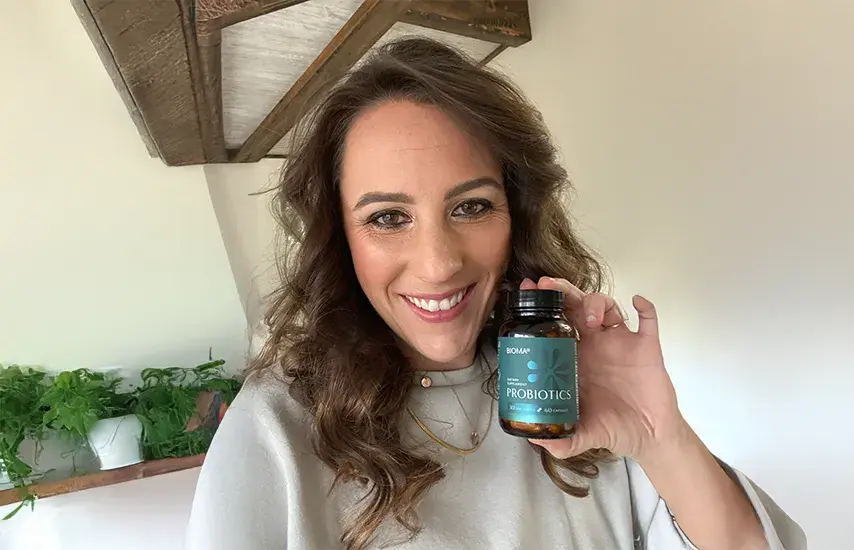
Less bloating. Fewer cravings. Better sleep. And, gradually, a belly that started to flatten out without changing anything else.
And that’s honestly the most reassuring part: it felt like the body was slowly getting back into balance.
Final thoughts: A new path to menopausal weight loss?
For years, we’ve been told to “eat less, move more,” or rely on HRT (hormone therapy). But new research shows the gut might be the missing link, especially when it comes to restoring hormonal balance naturally.
That’s what makes Bioma feel different. It’s built around that science – and more importantly, it works in a way that feels supportive, not extreme.
And for many women, it’s exactly what they need.
IMPORTANT UPDATE
Since this article was published on Health Insider, Bioma has gained tremendous attention and interest. The company has reached out to our editorial team to inform us that, for a limited time, they are offering our readers an exclusive 35% discount on Bioma. Plus, every order comes with free shipping, three gifts, and a money-back guarantee.

 9 sources
-
Why am I gaining weight so fast during menopause? And will hormone therapy help?
www.uchicagomedicine.org/forefront/womens-health-articles/menopause-weight-gain-hormone-therapy -
Menopause: Nutrition and Weight Gain
https://thebms.org.uk/wp-content/uploads/2023/06/19-BMS-TfC-Menopause-Nutrition-and-Weight-Gain-JUNE2023-A.pdf -
Understanding weight gain at menopause
https://pubmed.ncbi.nlm.nih.gov/22978257/ -
Cortisol Levels during the Menopausal Transition and Early Postmenopause: Observations from the Seattle Midlife Women’s Health Study
https://pmc.ncbi.nlm.nih.gov/articles/PMC2749064/ -
Effect of an ashwagandha (Withania Somnifera) root extract on climacteric symptoms in women during perimenopause: A randomized, double-blind, placebo-controlled study
https://pubmed.ncbi.nlm.nih.gov/34553463/ -
Effect of prebiotic and probiotic supplementation on circulating pro-inflammatory cytokines and urinary cortisol levels in patients with major depressive disorder: A double-blind, placebo-controlled randomized clinical trial
https://www.sciencedirect.com/science/article/abs/pii/S1756464618306170 -
Effects of Lactococcus lactis subsp. Cremoris YRC3780 daily intake on the HPA axis response to acute psychological stress in healthy Japanese men
https://www.nature.com/articles/s41430-021-00978-3 -
Gut microbiota has the potential to improve health of menopausal women by regulating estrogen
https://www.frontiersin.org/journals/endocrinology/articles/10.3389/fendo.2025.1562332/full -
Menopausal Symptoms and Their Management
https://pmc.ncbi.nlm.nih.gov/articles/PMC4890704/


Comments (3)
Leave a comment

Thank you for your comment

I’ve actually tried both of these, and I had almost the exact same experience!! Happy Mammoth helped a bit with mood, but that was about it. Bioma made a real difference! I was less bloated, more in control around food and my sleep got better too. After about two weeks, I could literally see my waist changing. This article described it so well!
Thank you for putting this together. It’s SO hard to find real, unbiased info when it comes to these supplements, everything feels like a sales pitch. I really appreciate you actually testing both and breaking down the ingredients like this. I’ve been on the fence for weeks and this finally helped me make up my mind! ❤️
I tried Happy Mammoth a while back and honestly… I didn’t notice much of a difference. 🙂 Maybe a little less moodiness, but absolutely nothing for the weight. Reading this, Bioma sounds way more like what I actually needed. Just ordered a bottle, fingers crossed!🤞